
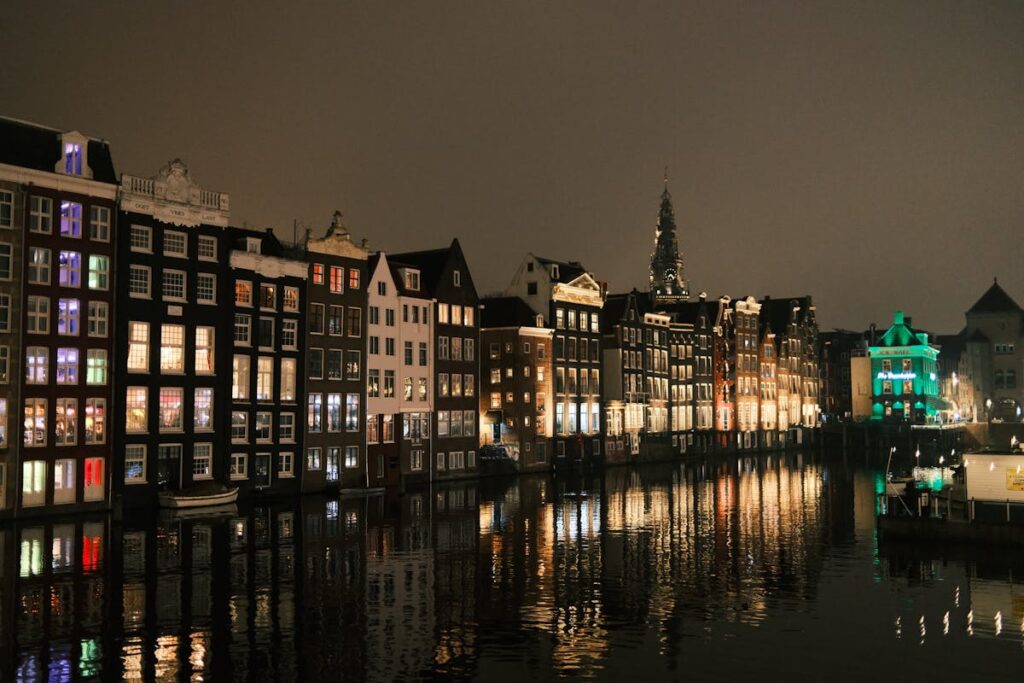
De Wallen is Amsterdam’s oldest neighborhood. It’s also the city’s most famous Red Light District — a few blocks of narrow alleys, canal-side buildings, and those iconic red-lit windows that have been pulling in curious visitors for centuries.
In This Article
- What De Wallen Actually Is
- A Quick History
- Walking Through De Wallen
- The Rules (Follow These)
- Beyond the Windows: What Else to See
- Oude Kerk
- Zeedijk and Chinatown
- The Museums
- Bars Worth Finding
- Safety
- Getting There and When to Visit
- The Changing Face of De Wallen
- Eating and Drinking in De Wallen
- Don’t Bother With
Most people come here expecting shock value. What they actually find is a working neighborhood where centuries of history sit right next to sex shops and some of Amsterdam’s oldest churches. It’s stranger and more interesting than the reputation suggests.
What De Wallen Actually Is
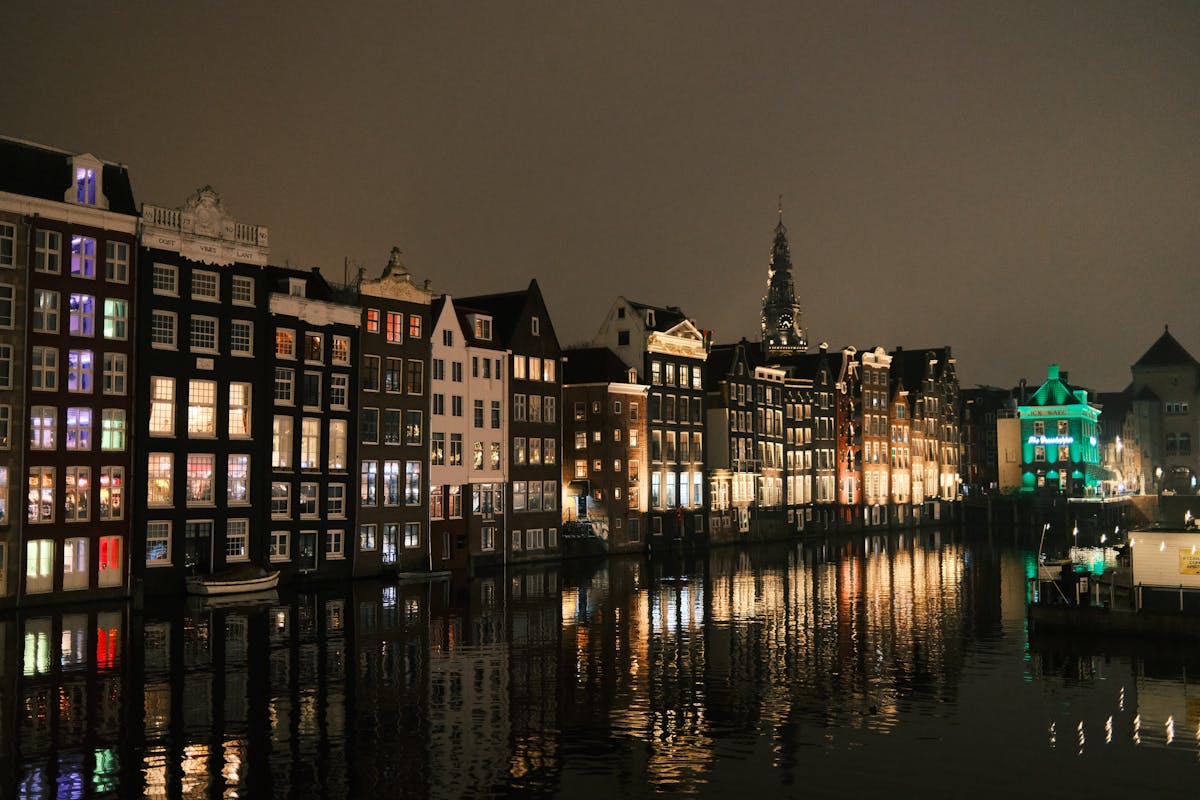
De Wallen (literally “the walls” — named after the old city walls that once ran through here) covers a small area between Centraal Station and Nieuwmarkt. The main streets are Oudezijds Achterburgwal and Oudezijds Voorburgwal, two parallel canals connected by a web of narrow alleys. That’s where most of the red-lit windows are.
But De Wallen isn’t only a Red Light District. Within those same few blocks you’ll find the Oude Kerk (Amsterdam’s oldest building, dating to 1306), a Chinatown that’s been here since the 1920s, some of the city’s best Indonesian restaurants, and residential apartments where people have lived for generations. The contrast is the point — it’s very Amsterdam.
The area has been associated with sex work since at least the 1200s, when sailors arriving at the port would head straight for the alleys behind the docks. Prostitution was formally legalized in the Netherlands in 2000, which means the women working in the windows operate legal businesses with licenses, health checks, and tax obligations. It’s a regulated industry, not the free-for-all that some visitors expect.
A Quick History
Amsterdam’s relationship with sex work is old. Really old. The port was one of Europe’s busiest from the 1300s onwards, and wherever there were sailors with money and time to kill, there were women willing to take both. By the 1600s — Amsterdam’s Golden Age — the area around the Oude Kerk was well established as the place where this trade happened, tolerated if not officially endorsed.
For centuries, Dutch law took a pragmatic approach: prostitution wasn’t legal but it wasn’t actively prosecuted either. The “gedoogbeleid” (tolerance policy) that people associate with cannabis applied to sex work long before it applied to coffeeshops. The women worked, the police kept an eye on things, and Amsterdam got on with being Amsterdam.
Full legalization came in 2000. That meant licenses, health inspections, tax obligations, and legal protections for the workers. In theory it was a progressive move. In practice it’s complicated — human trafficking remains a concern, and the line between voluntary and coerced sex work is harder to police than the law assumed. The city has been grappling with this ever since.
The window system itself is uniquely Dutch. The women rent the rooms behind the windows from landlords (at rates that would make central Amsterdam tenants weep — around 150 euros per shift for a small room). They set their own hours, choose their own clients, and keep their earnings minus the room rent. It’s a business model that’s been running, in one form or another, for about 700 years.
Walking Through De Wallen
The windows are active from around noon, but the area doesn’t really come alive until after dark. Between 11pm and 1am on a Friday or Saturday night is peak time — the alleys are crowded, the neon is bright, and the atmosphere is somewhere between carnival and museum.
Starting from Centraal Station, walk south along Warmoesstraat. This is one of Amsterdam’s oldest streets and it’s a mix of tourist shops, coffeeshops, and a handful of genuinely good bars. Turn into any of the small alleys heading east and you’ll hit the first windows on Oudezijds Achterburgwal.
The narrow alleys between the two main canals are where most of the windows are concentrated. Some are ground-floor, some are in basements with steep steps down. The red lights are the obvious ones — you’ll also notice blue and purple lights in some windows, which traditionally indicate transgender sex workers, though this isn’t a hard rule.
Keep walking south and you’ll emerge at Nieuwmarkt, a large square with cafes and the imposing Waag building (a 15th-century city gate that’s been a guild house, a fire station, and now a restaurant). This is a good place to get a coffee and process what you just walked through.
The Rules (Follow These)
The single most important rule: do not photograph or film the women in the windows. Don’t try to be subtle about it. Don’t pretend you’re photographing a building. Don’t use your phone at all while walking past the windows. The women will bang on the glass and shout at you, and they’re right to. Security guys patrol the alleys and they’ll confiscate your phone or ask you to delete photos.
This gets people in trouble more than anything else. Every night some tourist gets into an argument because they thought a quick snapshot was harmless. It isn’t. These are people at their workplace. You wouldn’t want someone photographing you at your desk without permission.
Other rules that should be obvious but apparently aren’t:
- Don’t touch the windows or doors unless you’re going in
- Don’t stand and stare — walk at a normal pace
- Don’t make crude comments or gestures
- Don’t go in groups of more than 3-4 people — large groups blocking the alleys are a nuisance
- Don’t buy drugs from street dealers (they sell fake or dangerous stuff, and police regularly do undercover sweeps)
The city has been cracking down on disrespectful tourism in De Wallen for years. There are now signs posted throughout the area reminding visitors of the rules. Follow them and you’ll have no problems.
Beyond the Windows: What Else to See
Oude Kerk
Amsterdam’s oldest church sits right in the middle of De Wallen, surrounded by red-lit windows on three sides. The juxtaposition is extraordinary — 14th-century stained glass above, sex workers below. The church dates to 1306 and has been rebuilt and expanded over the centuries. Rembrandt’s wife Saskia is buried here. Entry costs about 15 euros and it’s worth it for the floor alone — massive tombstones set into the ground, worn smooth by 700 years of footsteps.
Zeedijk and Chinatown
Zeedijk runs along the eastern edge of De Wallen and it’s quietly become one of the more interesting streets in the area. The southern end near Nieuwmarkt is Amsterdam’s Chinatown — the gate at the entrance was a gift from the People’s Republic of China. The restaurants here range from decent to excellent. Nam Kee on Zeedijk is an Amsterdam institution for Cantonese food, cash only, always busy, don’t expect friendly service but do expect good steamed oysters.
The northern end of Zeedijk, closer to Centraal, has a string of bars that have nothing to do with the Red Light District. Café ‘t Mandje at number 63 is Amsterdam’s oldest gay bar, open since 1927. The owner Bet van Beeren was a legendary figure in the neighborhood — the walls are still covered in ties she cut from customers’ necks as souvenirs. It closed in 1982 when she died and reopened in 2008 as a museum-bar. Small, packed, and full of history.
The Museums
The Sex Museum (Venustempel) on Damrak isn’t technically in De Wallen but it’s close enough that everyone visits it on the same trip. Three floors of art, photography, and historical exhibits tracing the history of sexuality. It’s more educational than salacious, and at around 5 euros entry it’s one of the cheapest museums in Amsterdam. The Erotic Museum on Oudezijds Achterburgwal is smaller, more explicitly focused, and honestly a bit tired — skip it unless you’ve already seen everything else.
The Hash Marihuana & Hemp Museum on Oudezijds Achterburgwal is more interesting than it sounds. It covers the history of cannabis cultivation worldwide, including the plant’s industrial uses (rope, textiles, paper). The displays on Dutch drug policy are genuinely informative.
Bars Worth Finding
Brouwerij de Prael on Oudezijds Armsteeg is a brewery taproom with its own beers and a completely different atmosphere from the tourist bars on the main alleys. It started as a social enterprise employing people with mental health challenges and the beers are genuinely good. Try the Bansen Koansen if it’s on tap.
In de Olofspoort on Nieuwebrugsteeg is a tiny tasting house (proeflokaal) that’s been serving jenever (Dutch gin) since 1619. The ceiling is so low you’ll hit your head if you’re over 180cm. They pour the traditional way — glasses filled to the brim, you lean down to take the first sip without lifting the glass. It’s the kind of place that only exists in Amsterdam.
Café de Engelbewaarder on Kloveniersburgwal does live jazz on Sunday afternoons and has a canal-side terrace that feels miles away from the Red Light District despite being two minutes’ walk from it.
Safety
De Wallen is generally safe. The area is well-lit, there are police patrols, and the sheer number of tourists means you’re rarely alone on any street. That said, some common-sense precautions apply.
Pickpockets work the narrow alleys, especially on busy weekend nights. Keep your phone in your front pocket. Don’t leave bags unattended or hanging off the back of chairs at cafes. The professional pickpocket teams know exactly when you’re distracted by a window.
Street dealers approach tourists constantly, usually offering cocaine, ecstasy, or mushrooms. What they’re actually selling is usually aspirin, baking soda, or something worse. The police know they’re there. Occasionally you’ll see a plain-clothes arrest. Don’t engage — a firm “no” and keep walking is all it takes.
Late at night (after 2am), the crowd thins out and the vibe shifts. Drunk tourists looking for trouble become more noticeable. If you’re not specifically going to a bar or club, there’s not much reason to be wandering the alleys at 3am.
The canals have no railings. This matters more than you’d think — after a few drinks, walking along a dark canal edge gets genuinely dangerous. Stick to the building side of the street.
Getting There and When to Visit
De Wallen is a five-minute walk south from Amsterdam Centraal Station. You can’t really miss it — follow the crowds heading down Warmoesstraat or Damstraat and you’ll end up there.
For a first visit, go in the early evening (around 8-9pm). The windows are lit, the area is busy but not mobbed, and you can still see the architecture and the churches without fighting through crowds. Friday and Saturday between 11pm and 1am is peak chaos — interesting to experience once but not ideal if you actually want to look around properly.
Daytime visits are underrated. The area has a completely different character when the sun is out — the canals are pretty, the Oude Kerk is peaceful, and you can actually appreciate the 17th-century buildings without the neon distraction. Some windows are active during the day but the atmosphere is much more low-key.
Avoid Kings Day (April 27th) unless you specifically want to experience Amsterdam at its most insane. De Wallen becomes so packed you can barely move, and the combination of a million drunk people in a small space with canals and narrow alleys is not for everyone.
The Changing Face of De Wallen
The city government has been reducing the number of window brothels for years, replacing some with fashion boutiques and art studios as part of a gentrification initiative called “Project 1012” (named after the area’s postcode). About a third of the windows that existed in 2007 are now gone.
Opinions on this are split. Some residents welcome the cleanup. Sex worker advocacy groups argue that reducing windows pushes the industry underground and makes it less safe. Tourist boards want a classier image. The women working the remaining windows just want to do their jobs in peace.
Whatever your view on the politics, the practical reality is that De Wallen is smaller than it used to be and may continue to shrink. If you’re curious about this part of Amsterdam’s identity, sooner is better than later.
Eating and Drinking in De Wallen
The area has more good food than you’d expect from a neighborhood famous for something else entirely.
For Indonesian food — which is really Dutch comfort food at this point — Bird on Zeedijk does a proper rijsttafel (rice table) with a dozen small dishes that’s enough for two people. It’s tiny, loud, and always full. Don’t bother booking on a Friday night, just turn up early.
Café Latei on Zeedijk is one of those Amsterdam places that makes no sense on paper. It’s a cafe where everything is for sale — the tables, the cups, the lamps, the chairs you’re sitting on. The coffee is good, the toasted sandwiches are cheap, and if you like the plate your lunch came on, you can buy it. Opens early, closes mid-afternoon. Great for a pre-wander breakfast.
For something fancier, Restaurant Greetje on Peperstraat does modern Dutch cooking — think slow-braised meats, root vegetables, and sauces that take three days to make. It’s pricey (mains around 30 euros) but it’s one of the few places in the area where the food is the actual attraction rather than the location.
If you just want a beer, Brouwerij de Prael (mentioned above) is the best option in De Wallen itself. Otherwise walk five minutes to Nieuwmarkt where Café De Doelen and In ‘t Aepjen (housed in a building from 1519 — one of only two wooden buildings left in central Amsterdam) are both excellent. In ‘t Aepjen’s name means “in the monkeys” — sailors used to pay their bar tab with exotic animals brought back from the East Indies. There are still monkey figurines everywhere inside.
Don’t Bother With
The organized “Red Light District tours” that every hostel and tourist office pushes are overpriced for what they are. You’ll pay 20-30 euros to walk the same streets you can walk for free, accompanied by a guide repeating the same facts you just read in this article. If you want a guided experience, the walking tours from Amsterdam’s own Prostitution Information Centre (PIC) on Enge Kerksteeg are run by people who actually know the industry from the inside.
The live sex shows (Casa Rosso is the most famous) are exactly what they sound like. If that’s your thing, go ahead — tickets are around 40-50 euros. If you’re expecting anything artistic or surprising, you’ll be disappointed. It’s mechanical, it’s brief, and it’s mostly watched by giggling tourist groups. The peep shows are cheaper (2 euros for about two minutes) and at least have the honesty of being straightforward about what they are.
The souvenir shops selling explicit merchandise are mostly the same stuff at different prices. If you must bring back a gag gift, walk to the end of the alley where the shops get less traffic — prices drop noticeably.
Beyond the Red Light District, if you want the wider set of guided options, Happy To Visit curates 15 favourite Amsterdam tours, and the city’s official I amsterdam site covers the canal-district visiting rules.