
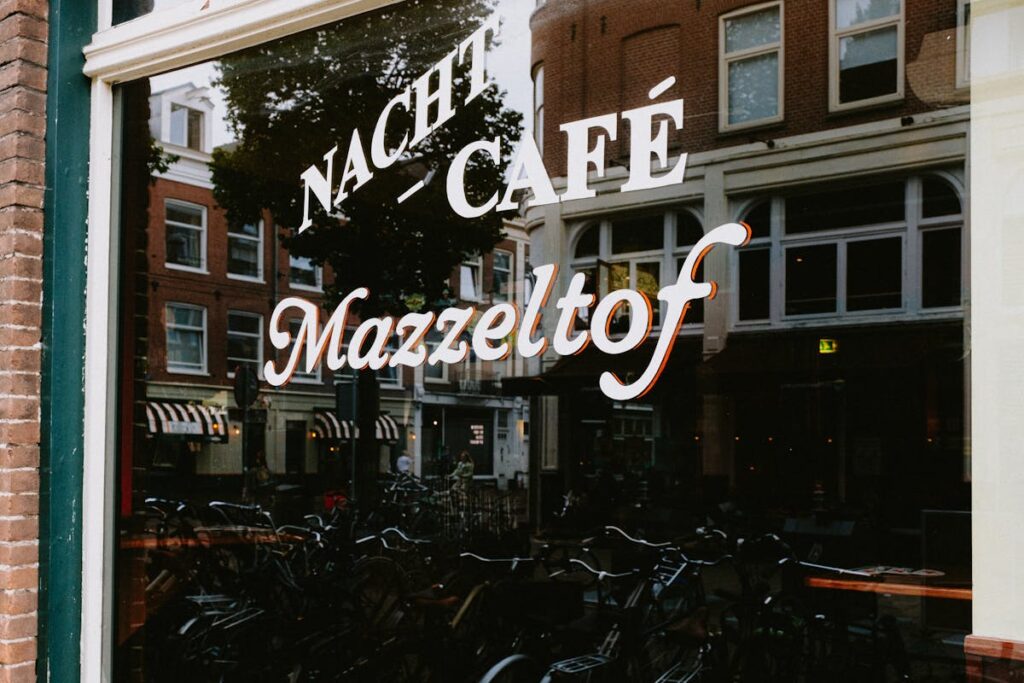
Amsterdam’s coffeeshops are probably the first thing half the city’s visitors come looking for. And fair enough — there’s nowhere else in Europe where you can walk into a shop, study a menu of cannabis strains, buy a gram, and smoke it legally at a table by the window while watching bikes go past.
In This Article
But there are rules. Quite a few of them, actually. And the difference between a good coffeeshop experience and a bad one usually comes down to knowing what you’re walking into before you get there.
Coffeeshops vs Cafes — Get This Right
A coffeeshop in Amsterdam is a licensed cannabis seller. A cafe (or koffiehuis) is where you get coffee. They are not the same thing. Walking into a cafe and asking for “the menu” will get you a list of cappuccinos and pastries, not strains of White Widow.
Licensed coffeeshops display a green and white sticker in the window. If you’re still not sure, the smell usually gives it away before you reach the door. There are around 160 licensed coffeeshops left in Amsterdam — down from over 300 in the 1990s as the city has steadily reduced the number of licenses.
How It Works
Walk in, find a seat, look at the menu. Every coffeeshop has one — usually a laminated card or a board behind the counter listing available strains with their type, strength, and price per gram. Prices typically range from 8-15 euros per gram depending on the strain and the shop’s location. Pre-rolled joints cost 4-8 euros.
If you don’t know what to ask for, talk to the budtender (the person behind the counter). This is literally their job and most of them are genuinely knowledgeable. Tell them whether you want something relaxing or energizing, whether you’ve smoked before, and how strong you want it. They’ll point you in the right direction.
The basic terminology:
- Sativa: A head high. More energetic, creative, social. Good for daytime. Can cause paranoia in higher doses if you’re not used to it
- Indica: A body high. Relaxing, sleepy, couch-locked. Better for evenings. The safer choice for beginners
- Hybrid: A mix of both. Most modern strains are hybrids leaning one way or the other
- Hash: Pressed resin, usually from Morocco or Afghanistan. Smoother than weed, different high. Popular with Dutch locals more than tourists
You can buy up to 5 grams per day per coffeeshop. That’s the legal limit and they enforce it. For most tourists, 1-2 grams is more than enough for an entire trip.
The Rules
Amsterdam’s coffeeshops operate under the “gedoogbeleid” — the Dutch tolerance policy. Cannabis is technically still illegal in the Netherlands. But licensed coffeeshops are tolerated to sell it under strict conditions. It’s a legal grey area that’s been running for about 50 years and it confuses everyone, including the Dutch.
The rules that matter to you:
- No alcohol. Coffeeshops cannot sell booze. Since 2007, they had to choose between selling cannabis or alcohol — almost all chose cannabis. Don’t bring your own beer in either
- No tobacco indoors. The Netherlands has a smoking ban in hospitality venues. You can smoke pure cannabis but not tobacco — which means no tobacco in your joints. Most coffeeshops offer a free herbal mix at the counter as an alternative to tobacco. Some have a separate smoking room for tobacco
- Minimum age 18. Bring your passport or ID. They check, especially if you look young
- No hard drugs. Don’t ask. Don’t bring any in. This is taken extremely seriously and a coffeeshop that gets caught allowing hard drugs on the premises loses its license immediately
- No advertising. Coffeeshops aren’t allowed to advertise, which is why they don’t have big neon signs or websites pushing their products. You find them by walking past or asking
- 5 gram maximum. Per purchase per day. More than enough
If You’ve Never Smoked Before
Amsterdam is not the place to go hard on your first experience. The weed here is strong — significantly stronger than what most people have encountered casually. Dutch-grown strains are cultivated for maximum THC content and even experienced smokers from other countries sometimes underestimate them.
Start with one or two puffs of a mild indica strain and wait 15 minutes. If you feel nothing, take another puff. Don’t try to keep up with whoever you’re with. The budtenders have seen a thousand tourists go green in the face from taking too much too fast — they’d rather you started slow.
If you feel lightheaded or nauseous, eat something sweet. A chocolate bar or a sugary drink raises your blood sugar and usually helps within 10-15 minutes. Most coffeeshops sell snacks and drinks at the counter for exactly this reason.
Space cakes and edibles are a different game entirely. The THC takes 1-2 hours to hit and the effect is stronger and longer-lasting than smoking. Eat half. Wait two hours. Then decide if you want more. Every coffeeshop has a story about the tourist who ate two brownies, felt nothing after 30 minutes, and then spent the next six hours in a very unhappy place.
Where to Go
The Tourist Classics
The Bulldog is Amsterdam’s most famous coffeeshop chain, running since 1975. The original location on Leidseplein is massive and always packed with tourists. It’s fine for a first visit — professional, well-run, big menu — but it’s not where locals go and the prices reflect the location. Think of it as the Hard Rock Cafe of coffeeshops.
Dampkring on Handboogstraat got famous when it appeared in the film Ocean’s Twelve. The interior is ornate — hand-painted walls, carved wood, low lighting — and the menu is strong. It’s touristy but not unpleasantly so, and the quality is consistent.
Barney’s on Haarlemmerstraat has won multiple Cannabis Cup awards and takes the product seriously. The attached Barney’s Lounge does good breakfasts if you need food before or after. Pricey but the quality justifies it.
The Locals’ Picks
Grey Area on Oude Leliestraat in the Jordaan is tiny — room for maybe 20 people — and run by an American expat who genuinely loves what he does. The strains here have won awards and the budtenders know their stuff inside out. It fills up fast on weekends so go early or during the week. This is my top recommendation for anyone who cares about quality over atmosphere.
De Tweede Kamer (The Second Chamber) on Heisteeg is a mellow, wood-paneled space near the Spui that attracts a mix of locals and tourists. Small, quiet, and the kind of place where you can actually sit and read a book. The hash selection is better than most.
Coffeeshop 1e Hulp (First Aid) on Marnixstraat is a neighborhood spot that most tourists walk right past. No frills, fair prices, and a local crowd who come regularly. If you want to see what a coffeeshop looks like when it’s not trying to impress anyone, this is it.
Mediterrane in the De Wallen area has a laid-back Mediterranean theme and a mellow vibe. Good for an afternoon session somewhere central without the full tourist circus.
Hill Street Blues on Nieuwmarkt is spacious by coffeeshop standards, with a decent range and a chilled atmosphere. Popular with expats.
One to Avoid
The coffeeshops directly on the Red Light District’s main alleys (Oudezijds Achterburgwal) charge more, have smaller menus, and are packed with people who are there for the novelty rather than the product. Walk five minutes in any direction and everything improves.
Practical Tips
Don’t smoke outside. Cannabis consumption is technically only tolerated inside coffeeshops. Smoking a joint on the street is frowned upon and in some areas (like the Red Light District) actively banned with on-the-spot fines. The parks are more relaxed about it — Vondelpark on a sunny day has a distinctly herbal haze — but officially it’s not allowed.
Don’t mix with alcohol. This is the number one cause of bad experiences. Cannabis and alcohol together hit much harder than either alone, and the effect is unpredictable. Pick one for the evening.
Don’t buy from street dealers. Anyone approaching you on the street offering drugs is selling fake or dangerous products. The coffeeshops exist specifically so you don’t have to deal with this. Use them.
You can take it with you. You can legally carry up to 5 grams on your person in the Netherlands. Don’t try to take it across a border — international borders mean international drug laws, and neither Schiphol Airport security nor the Belgian police share Amsterdam’s relaxed attitude.
Tipping. Not expected but appreciated. If the budtender spent ten minutes explaining strains to you, a euro or two is a nice gesture.
The Future of Amsterdam’s Coffeeshops
The coffeeshop landscape is changing. The number of licenses has been steadily reduced. There’s been ongoing political debate about a “wietpas” (weed pass) that would restrict coffeeshops to Dutch residents only — this was implemented in some southern cities like Maastricht but Amsterdam has so far refused to adopt it, arguing it would just push tourists toward street dealers.
A pilot program is currently testing legal supply chains for coffeeshops. Right now, coffeeshops can legally sell cannabis but cannot legally buy it wholesale — the entire supply side is technically illegal. The “paradox of the back door” has been a running joke in Dutch politics for decades. If the pilot succeeds, the entire system might finally be brought properly into the legal framework.
For now, though, the coffeeshops are open, the menus are full, and Amsterdam remains the only major European city where you can walk in off the street and buy cannabis over a counter. However long that lasts, it’s worth experiencing at least once.